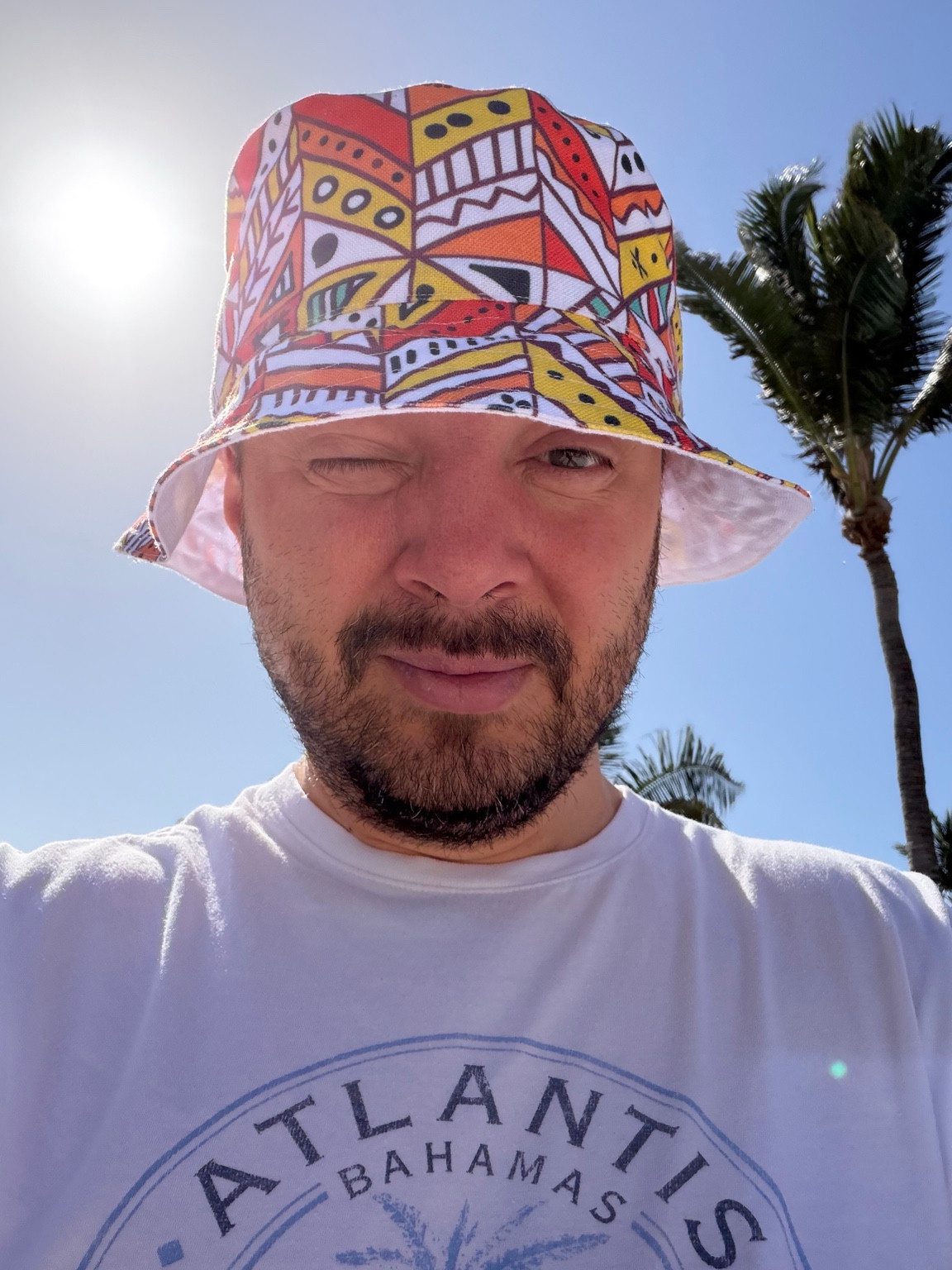
I came to poker in early 2009. I started with $65 and cheap Sit & Go tournaments. That was the beginning of a story that is still going.
For a long time, I played Double or Nothing. I gradually moved up the stakes: starting at a dollar and eventually reaching a hundred. In my first year, I won several tens of thousands of dollars. Considering the initial $65, that went quite well.
Then I moved to regular six- or nine-player SNGs. In 2010, I earned Supernova Elite status on PokerStars. The VIP programme at the time provided a substantial part of my income, and poker became a fairly stable, reliable source of income for me. I played a lot, earned money from playing, and received extra rewards for playing a lot. That arrangement suited me perfectly.
Twenty-four tables and a little maths
After Black Friday, there was much less SNG action. I had to figure out what to do next, so I moved to cash games on CAP tables, where the total amount a player could risk in a single hand was limited.
I played twenty-four tables at once. At first, stakes from $2/$4 to $5/$10, then eventually $10/$20 as well. I kept earning Supernova Elite year after year. I was putting in a lot of volume, the VIP programme was doing its thing, and I carried on in the same way.
Yet until 2014, I barely studied or analysed the game. I did not use training software or sit down after a session to review hands. I just played. A lot.
In 2014, I started studying with a coach. By then, I had already been earning my living through poker for five years and had played some substantial stakes, but that was when I began to understand the maths more deeply. It is a little funny to look back on now, but that is how my career developed.
I played that way until Supernova Elite was discontinued. When it became clear that the programme I knew would be gone, my first thought was something like: well, that is it. Without rakeback, poker is over for me.
I had become so used to that part of my income that, at first, it was hard to imagine how things would function without it. But I had to try. I cut down the number of tables, started studying on my own, and spent more time analysing the game.
The result was the best year of my career up to that point.
So I had already decided it was all over, and then suddenly played better than ever before. Quite a few things in my poker story have happened in a different order from the one I had imagined.
Short Deck and a twenty-thousand-dollar solver
Later, there was less action on PokerStars again. I tried live poker and thought about MTTs. But tournaments came with a simple problem: their schedule did not fit my time zone very well. I had never been good at playing through long nights, and you cannot just close a tournament halfway through because you feel sleepy.
That was around the time Short Deck appeared.
The game was new, and there were hardly any ready-made answers. No solid ranges, verified calculations, or clear foundation to build on, either. Some random guy sold me a set of fairly rough calculations for games with antes of 50 and 100. That was essentially my introduction to Short Deck.
Then the game started growing rapidly. I found people I could study with, discuss hands with, and look for answers alongside. We bought a specialised solver that cost, I think, around twenty thousand dollars, along with a server to run the calculations.
After that, I studied and analysed the game almost every day.
Compared with my early years, when I simply opened tables and played, it was quite a change. Now I had to run calculations, look at the results, and try to understand why the software was suggesting those decisions. Then do it again.
I spent several years studying Short Deck, and at first I did not even realise how much it was changing my understanding of poker as a whole. While studying one particular game, I gradually began to understand poker itself better. I only noticed that over time.
Poker, streams, and a trip to the Dominican Republic
During COVID, there was an enormous amount of Short Deck action. Plenty of everything: tables, action, opportunities to play. That same year, I started streaming regularly.
There was no grand goal behind it at first. I simply started going live, playing, and talking. I liked poker, and I also like to talk, so those two things came together quite naturally.
In early 2021, my family and I went to the Dominican Republic. I stepped away from poker for a while, and that was where a simple thought came together: I did not want to spend my whole life earning money only by playing.
I still loved poker, and I still do. But I increasingly wanted to give more attention to streaming. I enjoyed talking to people, discussing the game, and being part of that world in this format as well. The trip let me step back from daily sessions for a while and realise that this was the direction I wanted to take.
When I got home, the Ukrainian office of GGPoker contacted me and invited me to a meeting.
There, I met someone who really loved poker. And who seemed to love creativity around poker even more. I found that very inspiring.
GGPoker, Las Vegas, and new plans
After that meeting, we began collaborating. Around May 2021, I was offered a closer partnership. I was not yet sure I wanted to devote myself fully to streaming, but if I was going to do it, I was going to put real effort into it.
In 2021, I became a GGPoker ambassador in Ukraine. That same autumn, my family and I went to Las Vegas for the WSOP. I came back to Ukraine full of inspiration. There were projects ahead, streams, and the first Short Deck series I would be promoting as an ambassador. I was setting up a studio in Kyiv. There was plenty to do, and I wanted to do all of it.
Why autumn? Because of the COVID-19 pandemic, the 2021 WSOP in Las Vegas took place on unusual dates: from September 30 to November 23. The official plans for the series.
We usually spent the winter in Thailand, but we had no such trip planned for 2022. I wanted to stay in Kyiv and develop what we had started.
Then, one day after a session, I watched Munich: The Edge of War on Netflix. It is about 1938, the Sudetenland, and attempts to reach an agreement with Hitler. It reminded me of Crimea and Russia’s behaviour. I barely slept that night: I had a very strong feeling that a major war could begin.
We packed up and flew to Thailand as a family. We planned to stay for two months.
It turned into sixteen.
Language, Thailand, and Canada
In Thailand, I continued streaming the Short Deck series. Russian was my native language, and all my streams up to that point had been in Russian too.
After the full-scale invasion began in February 2022, part of the Russian audience reacted with hostility. During the first month, I still tried to explain in Russian what was happening. Then I switched to Ukrainian.
Before that, I had not spoken Ukrainian in everyday life. So I started speaking it live on stream. And I carried on streaming Short Deck in Ukrainian from Thailand.
We lived there for sixteen months. At some point, it became clear that the children needed stable schooling, and the whole family needed to stop living on pause. In late June or early July 2023, we moved to British Columbia, Canada.
I kept playing Short Deck and streaming in Ukrainian. In my own mind, I was still primarily a professional player. Content was part of my life, but playing was my main source of income. I played very high stakes and judged myself primarily through poker.
The first year in Canada was difficult. The uncertainty, the war — none of it disappeared after the move. For about a year, a friend funded my play at utterly astronomical stakes. We did not get the results we had hoped for, and eventually he stopped providing the funding.
Starting again, this time in tournaments
Sometime in late 2024 or early 2025, I switched to English-language streams. I had not spoken English before, either. So, for the second time, I started streaming in a language I had not previously spoken in daily life. First Ukrainian, then English.
In February 2025, I decided to move into MTTs, and from March onwards I focused entirely on tournaments.
Before that, I had not played MTTs regularly as a professional. I had been in poker for a long time, but in this particular discipline I had to start with things I did not yet know. I began with $100–200 tournaments. Those were not high stakes for me, but the game itself was new, and I saw no reason to jump much higher just because I had previously played expensive Short Deck.
This time, content was the main reason for the switch. I wanted to make interesting streams. And for an interesting tournament stream, it helps to reach a final table from time to time. Which, in turn, requires knowing how to play.
So I started studying again. Logic helped, as did my understanding of poker and everything I had built up over the previous years. I had spent a long time studying Short Deck without immediately realising how much I had learned. Now that experience was useful in a different format.
In November 2025, I won GGMillion$.
I entered that tournament to make interesting content. Looking at the field, I did not think I could outplay all those people. And then I went and won it. My poker story already had a few moments when my own prediction had been less than brilliant.
First place paid $336,740 in prize money. But another important part of this story is why I opened the tournament in the first place: I wanted to play and make an interesting stream.
Watch the GGMillion$ final table · official Ukrainian broadcast, November 4, 2025
My tournament graph has already passed a million dollars in profit. After many years in SNGs, cash games, and Short Deck, I found another game within poker.
My contract with GGPoker.ua ended in mid-summer 2026. On October 1, I signed a contract with GGPoker.com and became a global ambassador for the brand.
How I see myself now
For a long time, I was a professional player who also streamed. Now I increasingly see myself as a professional content creator who plays poker.
I still need to play well. I enjoy understanding the game, learning, and going further. But what I build my life around has changed. There is more room for conversations, streams, and everything I enjoy about poker beyond earning money at the tables.
I love poker. I love talking. And I love the process itself. In the end, that is what brought me from twenty-four tables to what I do now.